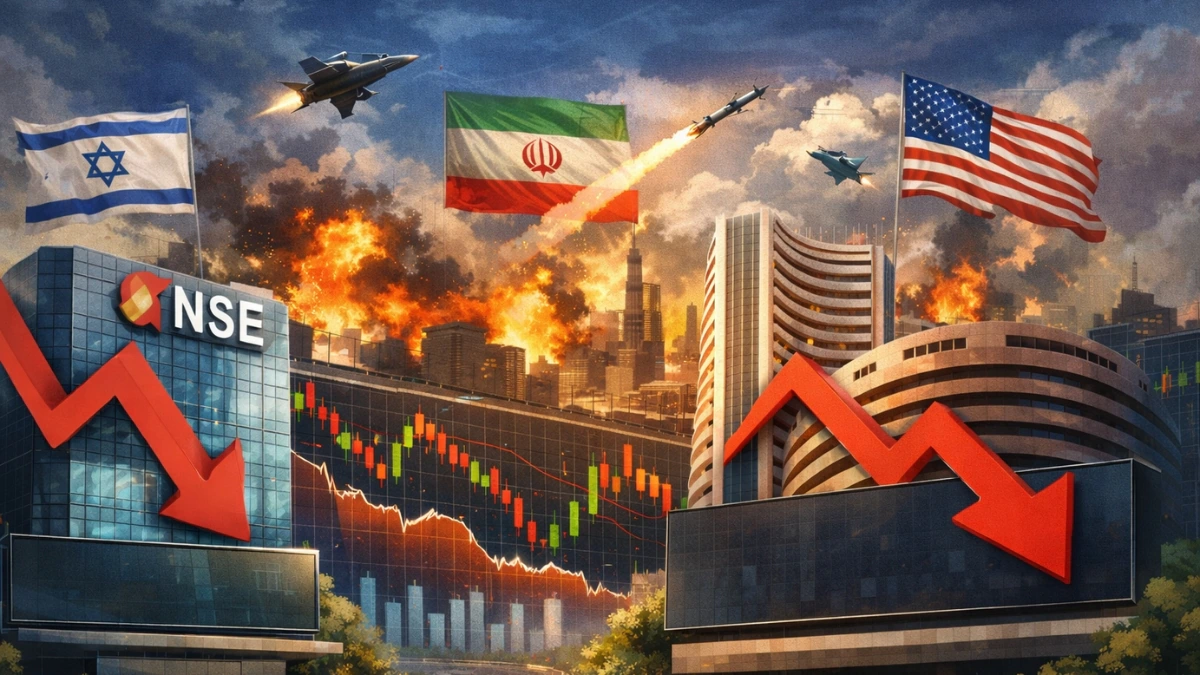
The Indian stock market witnessed a sharp decline today as global tensions escalated following the crucial US-Iran talks collapse. The Sensex and Nifty slipped nearly 1%, triggering panic among investors and raising serious concerns about the global economy.
But this isn’t just another market dip this is a geopolitical-driven shockwave.
- Oil prices surged above $100 per barrel
- Global markets turned volatile overnight
- Investor sentiment shifted from optimism to fear
The root cause?
- Failed US-Iran negotiations, which could potentially lead to conflict in West Asia a region critical to global oil supply.
Why should YOU care?
Because this situation affects:
- Your investments
- Your daily expenses (fuel, groceries)
- Your financial future
This blog breaks down everything you need to know in simple, practical language.
What Exactly Happened?
Over the weekend, high-stakes diplomatic talks between the United States and Iran collapsed after prolonged negotiations failed to produce a peace agreement.
Key Developments:
- Talks lasted over 20 hours
- No consensus was reached on nuclear and economic issues
- Rising tension increased the possibility of military escalation
- Reports suggest potential naval blockade of the Strait of Hormuz
Why is the Strait of Hormuz Important?
This narrow waterway:
- Handles ~20% of global oil supply
- Connects Middle East oil exporters to the world
Any disruption here =
- Oil supply shock
- Price surge
- Global economic instability
Simple Explanation:
Think of global markets like a chain reaction:
- War risk increases
- Oil prices rise
- Inflation increases
- Investors panic
- Stock markets fall
That’s exactly what we are seeing today.
Why Stock Markets Fell (Core Analysis)
Let’s break down the real reasons behind today’s stock market crash:
1. Rising Oil Prices = Inflation Fear
Oil is the backbone of the global economy.
When prices cross $100/barrel, it leads to:
- Expensive fuel
- Higher transportation costs
- Increased production costs
Result: Inflation rises → Markets fall
2. Global Uncertainty = Investor Panic
Markets hate uncertainty.
The collapse of US-Iran talks creates:
- Fear of war
- Supply disruptions
- Economic instability
Investors shift money out of risky assets like stocks.
3. Foreign Investors Pulling Out Money
Foreign Institutional Investors (FIIs):
- Start withdrawing capital
- Move funds to safer assets (US bonds, gold)
Result: Market declines
4. Risk-Off Sentiment
When investors feel unsafe:
- They stop investing
- Sell stocks
- Hold cash or gold
Market Example
Sensex dropped over 1600 points in early trade
Nifty fell nearly 2% at one point
This shows how sensitive markets are to geopolitical events.
Global Impact
This isn’t just India’s problem it’s global.
US Markets
- Mixed signals due to inflation fears
- Oil shock impacting tech & industrial sectors
Asian Markets
- Japan, South Korea, China all declined
- Risk sentiment spread globally
Emerging Economies (India)
- Higher oil import costs
- Currency pressure
- Stock market volatility
Currency Impact
- Indian rupee weakened
- Dollar strengthened
Why?
Because oil is priced in dollars.
When oil rises → India needs more dollars → rupee falls.
Oil Prices & Inflation – The Real Threat
The biggest danger is not just the stock market crash it’s inflation.
Why Oil Above $100 Is Dangerous:
- Petrol & diesel become expensive
- Transport cost increases
- Food prices rise
- Manufacturing becomes costly
Real Risk:
Oil shock can trigger:
- Inflation spike
- Interest rate hikes
- Slower economic growth
Key Fact:
Strait of Hormuz controls 20% of global oil supply
Any disruption = massive price surge.
Real-Life Examples
Let’s see how this affects real people
Example 1: Salaried Employee
Rahul earns ₹40,000/month.
Fuel price increase →
Monthly expenses rise by ₹2,000-₹3,000
Result:
- Savings reduce
- Budget stress increases
Example 2: Stock Investor
Priya invested ₹5 lakh in stocks.
Market crash →
Portfolio falls by ₹30,000–₹50,000
Result:
- Panic
- Emotional decision-making
Example 3: Small Business Owner
A shop owner depends on logistics.
Fuel cost rise →
- Transport cost increases
Result:
- Profit margins shrink
Example 4: SIP Investor
A mutual fund investor sees red portfolio.
Reaction:
- Fear
- Doubts about continuing investment
Reality:
- Market corrections are normal
Market Strength vs Weakness Analysis
Strengths
- Market corrections create buying opportunities
- Long-term investors benefit
- Gold & safe assets perform well
- Economic cycles rebalance
Weaknesses
- High volatility
- Inflation risk
- Foreign investment outflow
- Economic slowdown concerns
What Should Investors Do?
1. Stay Calm Avoid Panic Selling
Markets always recover over time.
2. Continue SIP Investments
- SIP works best during market dips
- You buy more units at lower prices
3. Diversify Portfolio
Don’t rely on one asset:
- Stocks
- Gold
- Debt funds
4. Invest in Defensive Sectors
Best sectors during uncertainty:
- FMCG
- Pharma
- Utilities
5. Track Oil Prices
Oil trends directly affect markets.
Expert Insights
Financial experts highlight:
- Oil price rise is a major threat to economic stability
- Global conflicts increase market volatility
- Investors should focus on long-term fundamentals
Key Insight:
“Geopolitical shocks create short-term volatility, but disciplined investors benefit in the long run.”
Future Outlook (2026 Predictions)
Scenario 1: Conflict Escalates
- Markets may fall further
- Oil could reach $120–$150
Scenario 2: Talks Resume
- Markets recover
- Oil prices stabilize
Scenario 3: Long-Term Impact
- Volatility continues
- Inflation pressures remain
How to Protect Your Money?
1. Build Emergency Fund
Minimum 6 months expenses
2. Avoid Over-Leverage
Don’t invest borrowed money
3. Invest in Safe Assets
- Gold
- Fixed deposits
4. Stay Disciplined
Consistency beats timing the market.
Check latest finance updates on benefitsindia.com
Also explore:
- Investment planning guides
- Government financial schemes
- Budgeting strategies
FAQs
1. Why did the stock market crash today?
Due to rising geopolitical tensions after US-Iran talks failed.
2. How does war affect the stock market?
War creates uncertainty, increases oil prices, and reduces investor confidence.
3. Should I invest during a market crash?
Yes, long-term investors benefit from lower prices.
4. Will markets recover soon?
Markets typically recover, but timing depends on global events.
5. Is this a good time to buy stocks?
Yes, for long-term investors with patience.
6. What sectors benefit during conflict?
- Oil & energy
- Defense
- Gold
7. Why does oil impact markets so much?
Because it affects inflation, production costs, and economic growth.
8. Should I stop SIP during market fall?
No, SIP should continue for best results.
Conclusion
The recent stock market crash is not just about numbers it reflects how deeply connected the global economy is to geopolitics.
- Oil prices
- War tensions
- Investor sentiment
All combine to create volatility.
But here’s the truth:
Market crashes are temporary disciplined investing is permanent.
Final Advice:
- Stay calm
- Stay invested
- Stay informed
Stay updated with the latest market trends, investment tips, and financial insights on benefitsindia.com
About The Author