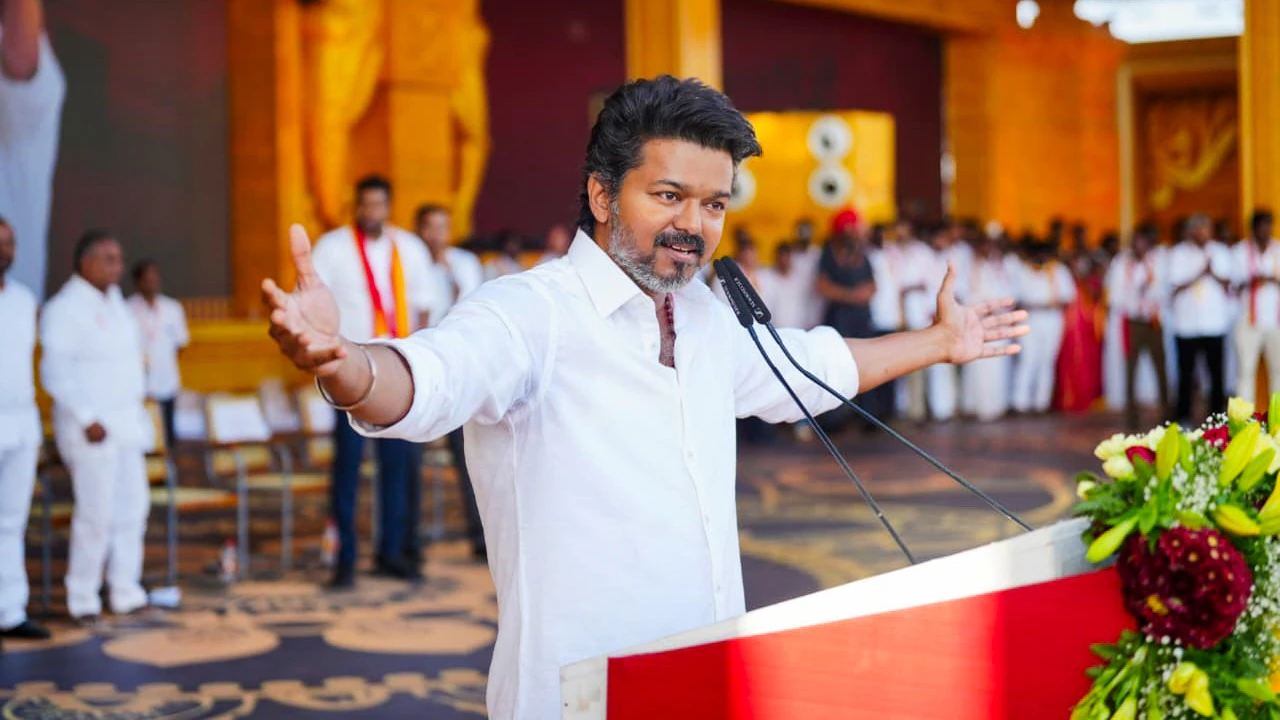
The political landscape of Tamil Nadu changed in a way very few expected. When C. Joseph Vijay took oath as Chief Minister in May 2026, it wasn’t just a victory it was a shift in decades-old political patterns.
For years, Tamil Nadu politics was largely dominated by two major parties. That cycle broke when Vijay’s party, Tamilaga Vettri Kazhagam, secured enough seats to form a government with coalition support.
This blog breaks down:
- What TVK actually promised in its manifesto
- Why people connected with those promises
- What Vijay has already started implementing
- And what it means for the future of governance
A New Political Beginning in Tamil Nadu
Vijay’s rise is not just about numbers. It represents a deeper shift in voter expectations.
Reports highlighted that his government marked:
“a new beginning” rooted in social justice and inclusive development
That messaging wasn’t random it came directly from the manifesto’s core idea:
“Secular social justice + welfare + system reform.”
What Was Inside the TVK Manifesto?
The manifesto was not just a list of promises. It was structured around key focus areas:
- Women
- Youth
- Governance
- Police
- Government employees
- Farmers
- MSMEs and weavers
This structured approach made it easier for voters to understand what they would actually get.
Women-Centric Promises: The Biggest Vote Puller
One of the strongest pillars of the manifesto was women welfare.
Key highlights included:
- ₹2,500 monthly financial support for women
- Free LPG cylinders
- Marriage assistance schemes
- Safety-focused measures
These weren’t just symbolic promises. They directly targeted household economics.
In many families, this was seen as guaranteed monthly support, not just a one-time benefit.
Youth & Employment: Direct Cash + Job Focus
Another major area was youth employment.
The manifesto promised:
- Monthly support for unemployed graduates (₹4,000)
- Large-scale internships
- Skill development programs
- Startup ecosystem push
It also proposed:
- 75% local job reservation policy
This was a big talking point because it directly addressed:
- unemployment frustration
- migration concerns
Farmers & Rural Economy
Farmers were another key group targeted in the manifesto.
The promises included:
- Crop loan waivers
- Income protection measures
- Rural economic strengthening
This helped build strong support in rural Tamil Nadu, where economic distress is often a major election issue.
Governance Reforms: Not Just Freebies
What made the manifesto different was that it didn’t focus only on welfare.
It also included governance changes:
- Faster delivery of services
- Anti-corruption systems
- Technology-driven governance
- Citizen service guarantees
This balance between welfare + system reform made it appealing to both rural and urban voters.
Health & Education Commitments
The manifesto also focused heavily on long-term sectors.
Health
- ₹25 lakh health insurance coverage
- Improved access to treatment
Education
- Free higher education for certain groups
- Interest-free loans
- New residential schools
These policies aimed to reduce financial pressure on middle-class and lower-income families.
Anti-Drug & Social Measures
One of the unique aspects of the manifesto was its focus on social issues.
It promised:
- Drug-free Tamil Nadu mission
- Protection zones around schools
- Community safety initiatives
This became especially important in urban areas.
What Happened After Vijay Became CM?
Unlike many political transitions, early actions came quickly.
Within days of taking oath, the government:
- Announced 200 units of free electricity
- Set up anti-drug task force
- Created women safety task force
This immediate action helped build credibility.
Why the Manifesto Worked
There are a few clear reasons why voters responded strongly:
1. Direct Financial Support
Cash benefits are easy to understand and immediate.
2. Clear Target Groups
Women, youth, farmers—each had specific promises.
3. Mix of Welfare + Reform
Not just “freebies,” but governance changes too.
4. Fresh Alternative
It broke the long-standing dominance of traditional parties.
The 40-Point Strategy That Changed Elections
The manifesto was reportedly structured into a detailed plan.
It included:
- welfare programs
- employment generation
- administrative reforms
This multi-layered approach played a major role in electoral success.
Real Impact: What People Expect Now
After the victory, expectations are very high.
People now expect:
- fast implementation
- visible results
- corruption-free governance
This is where most governments face challenges.
Challenges Ahead
Even with a strong mandate, there are challenges:
Financial Pressure
Welfare schemes require large budgets.
Execution Gap
Promises vs implementation is always tricky.
Political Opposition
Breaking old political systems brings resistance.
A Shift from Cinema to Governance
Vijay’s transition from film to politics is significant.
It shows:
- celebrity influence in politics
- public trust shift
- demand for new leadership
But governance is a different game altogether.
What Makes This Government Different?
From early signs, three things stand out:
- Fast initial decisions
- Focus on welfare + law enforcement
- Clear communication style
Is This a Long-Term Political Shift?
This election may not be just a one-time event.
It could indicate:
- decline of traditional party dominance
- rise of issue-based politics
- increasing role of youth voters
Expert Insight
From a policy perspective, the TVK manifesto combines:
- short-term welfare (cash, subsidies)
- medium-term employment strategies
- long-term governance reforms
This kind of layered approach is often seen in successful political campaigns.
Final Thoughts
The 2026 Tamil Nadu election is not just about a new Chief Minister.
It represents:
- changing voter expectations
- demand for direct benefits
- desire for cleaner governance
Whether this model succeeds depends on execution.
But one thing is clear—
this election has changed the direction of Tamil Nadu politics.
FAQs
1. Who is the new Chief Minister of Tamil Nadu in 2026?
C. Joseph Vijay became CM after winning the 2026 elections.
2. What is TVK manifesto?
The Tamilaga Vettri Kazhagam manifesto is a plan focused on welfare, jobs, governance reforms, and social justice.
3. What were the main promises?
Key promises included:
- ₹2,500 monthly aid for women
- Jobs and financial support for youth
- Farmer benefits
- Governance reforms
4. What actions were taken after forming government?
Early actions included:
- Free electricity
- Anti-drug task force
- Women safety measures
5. Why did TVK win the election?
The combination of:
- welfare schemes
- youth focus
- fresh leadership
helped the party win.
If you’re following government schemes, jobs, or policy updates, things change fast sometimes without clear announcements.
Instead of missing updates or relying on random sources, it’s better to keep one reliable place bookmarked.
For regular updates, simple guides, and real explanations, visit: https://benefitsindia.com/
Also Read:
PM Awas Yojana 2026
Punjab Police Recruitment 2026
Punjab ₹1000 Women Scheme 2026
Pradhan Mantri Jeevan Jyoti Bima Yojana (PMJJBY)
UPSSSC Excise Constable Recruitment 2026
Indian Bank SO Recruitment 2026
Indian Army NCC Special Entry 124th October Course 2026
AIIMS Junior Assistant Recruitment 2026 India
Indian Navy SSR Medical Branch Recruitment 2026
Stock Markets Crash as US–Iran Talks Collapse
Airport Security Staff Jobs 2026
Aadhaar Operator Recruitment 2026
About The Author