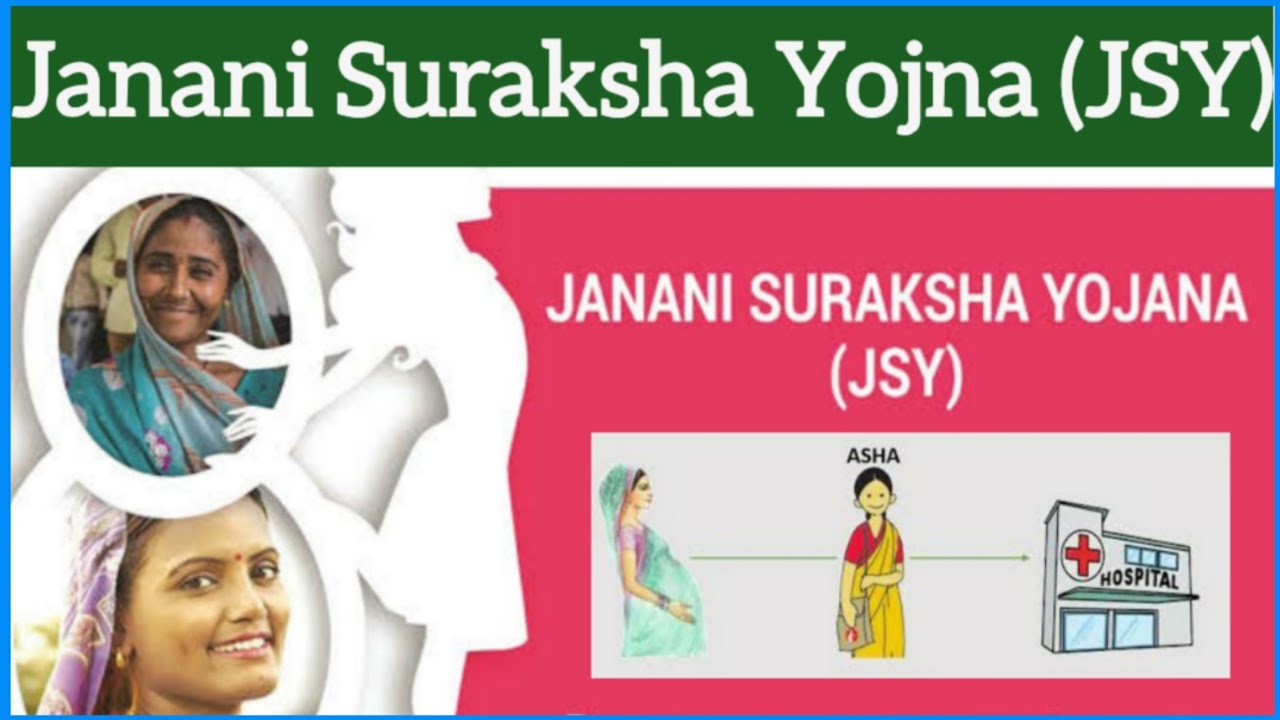
If you ask most people what government schemes do, they’ll give you a standard answer:
“Financial help.”
But some schemes are not just about money.
They quietly change behavior.
They influence decisions.
And sometimes, they literally save lives.
That’s where Janani Suraksha Yojana (JSY) fits in.
On paper, it’s a maternity benefit scheme.
In reality, it’s one of the biggest reasons why more women in India now choose to deliver in hospitals instead of at home.
And that shift… matters more than it sounds.
What Is Janani Suraksha Yojana?
Janani Suraksha Yojana is a government initiative under the National Health Mission.
Its core goal is simple:
- Reduce maternal and newborn deaths
- Encourage safe delivery in hospitals
The scheme was launched in 2005 and is implemented across all states and union territories.
But here’s the important part most people miss:
This scheme doesn’t just “offer support.”
It actively pushes institutional delivery by giving cash incentives to mothers.
And that small push has had a big impact.
Why Was This Scheme Needed in the First Place?
Before JSY, a large number of deliveries especially in rural and low-income areas happened at home.
Now, home delivery isn’t always unsafe.
But without trained medical support, complications can turn serious very quickly.
That’s exactly what the government wanted to change.
So instead of forcing people…
They created an incentive.
If you deliver in a hospital → you get financial assistance.
That’s the core idea.
The Real Objective
Officially, JSY aims to:
- Reduce maternal mortality
- Reduce neonatal mortality
- Promote institutional deliveries
But practically, it does something deeper:
It removes hesitation.
Because for many families, the decision is not about awareness it’s about affordability and access.
How the Scheme Actually Works?
Let’s break it down in the simplest way possible.
A pregnant woman:
- Registers during pregnancy
- Gets checkups (often with help from ASHA workers)
- Delivers in a government or approved hospital
- Receives cash assistance
That’s it.
No complicated structure.
No hidden layers.
The Role of ASHA Workers
One of the strongest parts of this scheme is something most blogs barely talk about.
ASHA (Accredited Social Health Activist)
They act as a bridge between:
- The government
- Pregnant women in villages or communities
They:
- Help with registration
- Guide mothers to hospitals
- Track pregnancies
- Ensure post-delivery care
In fact, the scheme specifically identifies ASHA as a key link for implementation.
Without them, the scheme wouldn’t work the same way.
Who Can Apply?
Now this is where people usually get confused.
So let’s simplify it.
You are eligible if:
- You are a pregnant woman
- You are 19 years or older
- You belong to BPL category OR SC/ST (in many cases)
- You deliver in a government or accredited private hospital
Also:
- Benefits are generally available for up to two live births
Special Case
In some situations:
- Even home delivery may receive limited assistance (around ₹500)
But the scheme clearly focuses on hospital deliveries.
Low Performing States vs High-Performing States
Not all states are treated the same under JSY.
The government divides them into:
Low Performing States (LPS)
States where institutional delivery rates are lower.
Examples include:
- Uttar Pradesh
- Bihar
- Madhya Pradesh
- Rajasthan
- Assam
High Performing States (HPS)
States with better healthcare access and delivery rates.
Why This Matters
Because cash benefits differ based on this classification.
And yes, this directly affects how much money a beneficiary receives.
Financial Benefits
Let’s talk numbers clearly.
In Low Performing States (LPS)
Rural Areas:
- Mother: ₹1400
- ASHA: ₹600
- Total support: ₹2000
Urban Areas:
- Mother: ₹1000
- ASHA: ₹400
In High Performing States (HPS)
Rural Areas:
- Mother: ₹700
- ASHA: ₹600
Urban Areas:
- Mother: ₹600
- ASHA: ₹400
Additional Note
Cash is usually provided to:
- Cover delivery-related expenses
- Reduce out-of-pocket burden
And most importantly-
Encourage hospital-based childbirth
What Benefits Go Beyond Money
A lot of people think JSY is only about cash.
It’s not.
1. Antenatal Care
Women get:
- Regular checkups
- Monitoring during pregnancy
2. Safe Delivery
Access to:
- Skilled doctors
- Medical equipment
- Emergency care
3. Post-Natal Care
After delivery:
- Mother and baby are monitored
- Breastfeeding support is promoted
4. Emergency Support
Even cases like:
- Caesarean sections
Are supported if needed.
Documents Required
From what’s typically required:
- Mother and Child Protection Card
- BPL card / ration card (if applicable)
- SC/ST certificate (if applicable)
- Identity proof
How to Apply?
Here’s how it usually works on the ground:
Step 1: Registration
You register during pregnancy at:
- Government hospital
- Health center
- With ASHA worker
Step 2: Tracking
Your pregnancy is monitored.
ASHA workers often:
- Keep records
- Help plan delivery
Step 3: Institutional Delivery
You deliver in:
- Government hospital
OR - Accredited private hospital
Step 4: Cash Benefit
After delivery:
- Payment is made via bank transfer or other official channels
Reality Check
Not everything works perfectly.
There have been cases where:
- Payments are delayed
- Beneficiaries are not fully covered
In fact, reports have shown that not all eligible mothers receive payouts on time.
But still-
The scheme has significantly increased institutional deliveries across India.
Why JSY Still Matters Today?
Even after years of implementation, JSY continues to be relevant.
Because:
- Maternal health is still uneven across regions
- Rural healthcare gaps still exist
- Awareness is still incomplete
And most importantly—
For many families, this scheme is still the difference between home delivery and hospital delivery.
A Ground-Level Perspective
If you talk to families in rural areas, you’ll notice something interesting.
The decision to go to a hospital is often influenced by:
- Cost
- Distance
- Trust
JSY quietly addresses all three.
- It reduces cost
- It builds trust through ASHA workers
- It creates a system around the mother
That’s why it works.
Common Mistakes People Make
Let’s be honest, this is where many lose benefits.
1. Late Registration
Delays everything.
2. Missing Documents
Even one missing paper can stop payment.
3. Not Choosing Approved Hospitals
Benefits are linked to specific institutions.
4. Lack of Follow-Up
Many people don’t track their application status.
FAQs
Is JSY available in all states?
Yes, across India.
Can private hospitals be used?
Only if they are government-approved.
Is age mandatory?
Yes, generally 19+ years.
Is it only for poor families?
Mostly targeted toward BPL and vulnerable groups.
One Practical Suggestion
Most people don’t struggle with eligibility.
They struggle with understanding the process clearly.
Information is often:
- Scattered
- Outdated
- Overly technical
If you want everything explained in a simpler way, you can check the following:
It helps break down schemes like this in a way that actually makes sense.
Also Read:
PM Awas Yojana 2026
Punjab Police Recruitment 2026
Punjab ₹1000 Women Scheme 2026
Pradhan Mantri Jeevan Jyoti Bima Yojana (PMJJBY)
UPSSSC Excise Constable Recruitment 2026
Indian Bank SO Recruitment 2026
Indian Army NCC Special Entry 124th October Course 2026
AIIMS Junior Assistant Recruitment 2026 India
Indian Navy SSR Medical Branch Recruitment 2026
Stock Markets Crash as US–Iran Talks Collapse
Airport Security Staff Jobs 2026
Aadhaar Operator Recruitment 2026
About The Author