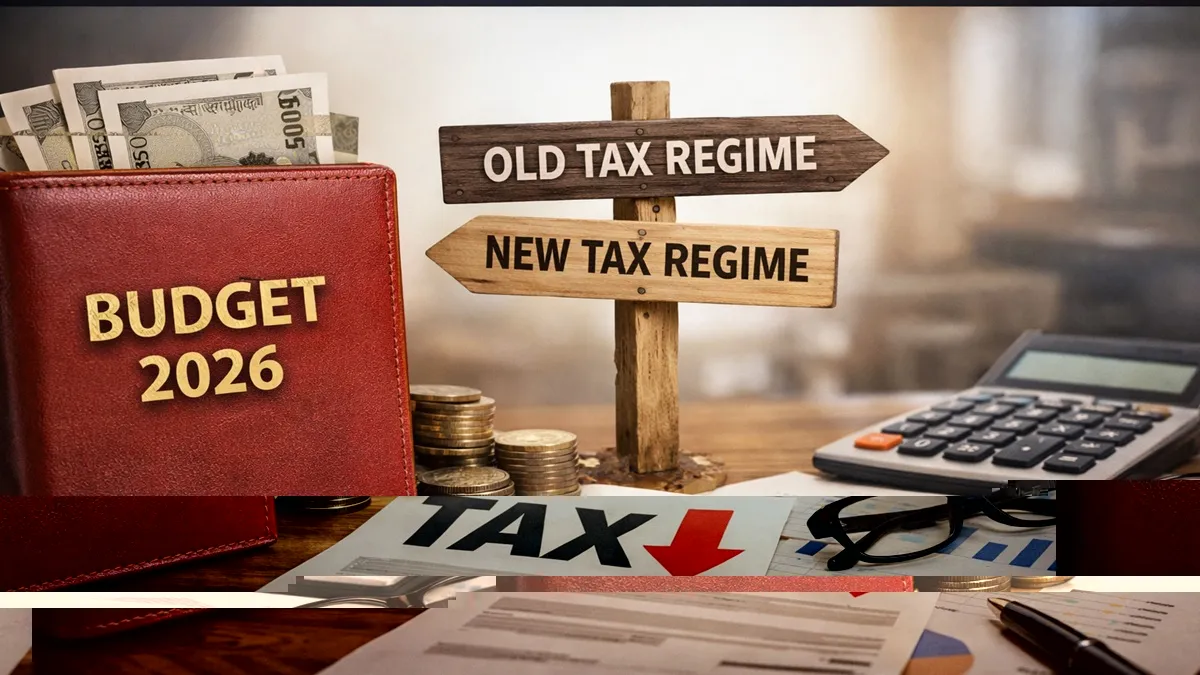
For people who get a salary, the question about the tax regime comes up every year around March. This usually happens in a five-minute talk with the human resources department. The tax regime question is important. It needs more time to think about it. When the new tax regime became the option, every employee is basically choosing it if they do not say otherwise. So if an employee does nothing, that is a decision about the tax regime. The tax regime is a thing to consider for every employee.
The right choice for you depends on your salary structure, the number of deductions you actually use, and where your finances are going to be over the few years. This piece is going to walk you through how the new tax regime works and how it compares to the old tax regime and the practical questions that are worth asking before you make your decision for the year.
What Is the New Tax Regime?
The new tax regime, introduced to simplify income tax calculation, works on a straightforward idea: lower tax rates in exchange for giving up most exemptions and deductions. Instead of tracking rent receipts, insurance premiums, and investment proofs, you apply a fixed set of slab rates to your income, and that’s largely it.
It was designed for two kinds of taxpayers younger employees who haven’t yet built up a portfolio of tax-saving investments and anyone who finds the paperwork of the old system more trouble than the savings are worth. It isn’t universally better; it’s simpler, which is a different thing.
Key Features of the New Tax Regime (FY 2026‑27)
| Feature | Detail |
|---|---|
| Basic exemption limit | Income up to ₹4 lakh is tax-free |
| Slab rates | 4–8L: 5% · 8–12L: 10% · 12–16L: 15% · 16–20L: 20% · 20–24L: 25% · Above 24L: 30% |
| Standard deduction | ₹75,000 for salaried individuals and pensioners |
| Section 87A rebate | Up to ₹60,000, making taxable income up to ₹12 lakh effectively tax-free |
| Effective tax-free ceiling (salaried) | Up to ₹12.75 lakh gross salary, after standard deduction |
| Deductions allowed | Standard deduction, employer’s NPS contribution (up to 14% of salary), family pension deduction |
| Deductions not allowed | Section 80C, 80D, HRA, LTA, home loan interest on a self-occupied house |
| Default status | Automatically applied unless you opt for the old regime |
New Tax Regime vs Old Tax Regime
| Parameter | New Tax Regime | Old Tax Regime |
|---|---|---|
| Calculation approach | Lower slab rates, fewer adjustments | Higher slab rates, reduced by deductions |
| Deductions & exemptions | Very limited | Wide range 80C, 80D, HRA, home loan interest, etc. |
| Best suited for | Those with few investments or a rented/no home loan | Those with active investments, insurance, or a home loan |
| Simplicity | High minimal documentation | Lower needs proofs and receipts |
| Investment flexibility | Not tied to any tax-saving product | Rewards specific investments (PPF, ELSS, insurance) |
| Record-keeping | Minimal | Significant, especially near filing season |
Advantages of the New Tax Regime
The biggest advantage of this system is that it is simple. There is less to keep track of and less chance of making mistakes when filing. This system is also good for employees who are just starting their careers and do not have a home loan or many insurance policies. The simplicity of this system is a draw because these employees are not missing out on tax deductions they were not using anyway. For people who earn an income, the lower tax rates mean they pay less tax even if they do not make any investments to save on tax. The simplicity of this system is an advantage, and the lower tax rates are a bonus for many people.
Possible Limitations
The flip side is that anyone with a home loan, sizable 80C investments, or high HRA exemption may end up paying more under the new regime, simply because those benefits disappear. It also removes a nudge that pushed many people toward long-term saving instruments like PPF or ELSS. The right answer genuinely varies by household a colleague’s ideal regime may not be yours.
How to Choose the Right Option
You should think about things before you make a decision. How much do the investments you have in 80C and 80D really help reduce the amount of tax you have to pay? Do you have a home loan? Is the house for you to live in, or do you rent it out to someone else? Is there something called HRA in your salary that you can really use? What about after this year? Are you going to buy a house, get a lot of insurance, or have your income change? The only way to know for sure is to look at your money under both systems rather than just guessing. You should look at your 80C and 80D investments and your home loan to see what is best for you.
Common Tax Planning Mistakes
People often pick a regime once and never revisit it, even after a salary hike, a new home loan, or a lapsed insurance policy changes the math. Others assume the “new regime is always better” simply because it’s the default, without running actual numbers. Missing documentation, especially from the old regime, is another frequent, avoidable problem. Reviewing your choice every financial year, not just once, closes most of these gaps.
Example Case Study
The following example is fictional and created only for educational purposes.
Priya Mehta, a marketing executive in Pune, stayed with the default new regime for two years without comparing it against the old one. When she eventually sat down with her salary slip, her 80C investments, and her health insurance premium, she found the old regime would have saved her a modest amount that year but not by enough to matter every year. The lesson wasn’t “old is better” or “new is better.” It was that the comparison itself is worth doing annually since her own numbers shifted from year to year.
Practical Tax Planning Tips
Keep your Form 16 and investment proofs and rent receipts organized through the year. This way you do not have to scramble in March. You should review your investment mix every year to see if it is still good for your goals, not just for saving tax. For example, Form 16 and investment proofs and rent receipts are important for tax savings. Run both new tax regimes through a calculator before you file your taxes do not just assume which one is better for you. Also keep an eye on what the budget announcements say each year because the rebate and slab figures for Form 16 and investment proofs and rent receipts can change.
Frequently Asked Questions
Who can choose the new tax regime?
Nearly all individual taxpayers, including salaried employees, pensioners, and NRIs, are eligible.
Can I change my tax regime later?
Salaried individuals without business income can switch between regimes each financial year at the time of filing.
Is the new tax regime compulsory?
No. It’s the default, but you can opt for the old regime instead.
Which deductions are available under the new regime?
Mainly the standard deduction and employer’s NPS contribution; most other exemptions are excluded.
Is it suitable for salaried employees?
It can be, particularly for those with few deductions, but it depends on individual circumstances.
How can I compare both regimes?
Use an official or reliable tax calculator with your actual income and deduction figures.
Does salary level affect the decision?
Yes, higher income with heavy deductions often favors the old regime; simpler salary structures often favor the new one.
Where can I verify current tax rules?
The Income Tax Department’s official website (incometax.gov.in) has the latest provisions.
Conclusion
Choosing between the two tax regimes isn’t a one-time decision or a one-size-fits-all answer it depends on your income, your existing investments, and where your finances are headed. The only way to know which suits you is to compare both options using your own numbers, ideally every year before filing. And always verify current provisions from official sources, since rules can and do change. Ultimately, tax planning works best when it supports your longer-term financial goals, not just this year’s tax bill.
About The Author