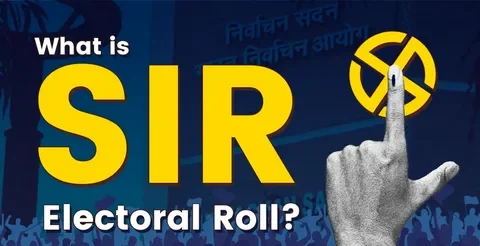
Every few years, a phrase like “Special Intensive Revision” starts showing up in the news, and a lot of people aren’t quite sure what it actually means for them. Put simply, it’s how the Election Commission periodically cleans up and updates the country’s voter lists adding people who should be on them and removing entries that shouldn’t be there anymore.
You’ll likely hear about this before major elections, sometimes with confusion or rumors attached. This guide sticks to the actual process of what SIR is, why it happens, what documents matter, and how you can check your own name on the rolls without wading into political debate around it.
What Is an Electoral Roll?
The voter list is a list of people who can vote in an area. This is also called a roll. The Election Commission of India has people in charge who make sure the voter list is correct. They are called electoral registration officers. The voter list is updated all the time to add voters and remove people who have died or moved away. The voter list is the record of everyone who is allowed to vote in a given area.
Why does accuracy here matter so much? Because an outdated roll with duplicate names, deceased voters still listed, or eligible citizens missing entirely undermines confidence in the process itself, on both counts: people wrongly excluded and names that shouldn’t count still sitting there.
What Is Special Intensive Revision (SIR)?
The thing about SIR is that it is not like the updates that happen every year. SIR is an exercise where people go from door to door to check everything. The goal of SIR is to make sure the lists of voters in India are correct. It does this by removing the names of people who have died, people who have moved away, names that are listed twice, and people who are not citizens of India. At the time SIR makes sure that people who are allowed to vote are not left out.
The Election Commission said that the last time they did something like this all over the country was between 2001 and 2004. That was over twenty years ago. This is why a lot of people think this time is a big deal. In the past, individual states did this one by one, not all at the time. SIR is an exercise, and the Election Commission is taking it very seriously to make sure the lists of voters in India are accurate.
Constitutional and Legal Background
India runs on adult suffrage. Every citizen who meets the age and residency criteria gets one vote, regardless of their background. The Election Commission of India is a body. Its main task is to conduct fair elections. This includes keeping voter rolls.
In May 2026 the Supreme Court of India said that SIR is legitimate. The court held that SIR is consistent with the Representation of the People Act. The Commission has a duty to conduct free and fair elections. The court agreed with this. Legal positions can change. This is how things stand right now.
Who Can Register as a Voter?
To vote you have to be a citizen of India. You must be at least 18 years old on the day that decides if you can vote. You also have to live in the area where you want to register to vote. You can only register in one place. The Election Commission of India decides the rules for voting. They decide when you can vote and what you need to do to vote. You should check the website voters.eci.gov.in to see what the rules are now. Do not look at the rules from last year because they might have changed. The Election Commission of India makes rules for each voting cycle. So you have to check voters.eci.gov.in for the rules. Voting rules are different for each cycle, and the Election Commission of India decides them.
Why Electoral Roll Revisions Are Conducted
The reasons are really simple: we need to add voters who are now 18 years old or have just moved to our area. We also need to remove people who are registered in more than one place. We have to delete the names of people who have passed away. We have to correct addresses and personal details that’re no longer correct. This does not help one side more than the other. Having a list of voters helps the voting process itself. The voter list needs to be accurate. This is what we are trying to do with the voter list.
Documents Commonly Used During Verification
| Document Type | Examples |
|---|---|
| Identity proof | Aadhaar, PAN card, passport, driving license |
| Address proof | Utility bills, ration card, rent agreement |
| Date of birth proof | Birth certificate, school certificate, passport |
| Citizenship-related proof | As specified for cases requiring further verification |
| Prior electoral roll record | Entries from a previous roll, where applicable |
Requirements can vary by state and by individual case. Always confirm the exact list against the current ECI notification rather than an old news article.
Step-by-Step: Checking Your Name on the Electoral Roll
To get started, go to the ECI portal, which is voters.eci.gov.in. Do not use any website that says it can do the same thing. Use your number to search for your information. You can also use your name, age, and the place where you live to search. When you find your name, make sure everything is correct. Check that your name is spelled right and your address is correct. Your age is right. Make sure all of this matches the information on your documents. If something is wrong, you can fix it on the website. You can talk to the person in charge of your area, which is called the Booth Level Officer. When you apply to make a change, you will get a number. Write this number down so you can check on your application later if it takes a while to be processed.
Timeline of the Revision Process
The process of making the electoral roll generally has main steps. First the booth-level officers go from house to house to collect and check the forms. Then they make a list of all the people who are probably going to be on the roll. After that people can look at the list. Say if someone is missing or if there is a mistake. If someone is not on the list and they think they should be, they can say something about it. The people in charge will then listen to what they have to say and try to fix the problem. Finally, they make the list of who can vote. The Booth Level Officers and the Chief Electoral Officer are in charge of all this. You should check the website of your chief electoral officer to find out when all these things are happening in your area.
Common Reasons Names Need Correction
Address changes after moving cities, simple spelling mistakes carried over from years-old records, duplicate entries from being registered in two places at once, entries missing entirely due to earlier administrative gaps, and outdated family details after migration. Most of these are fixable through the standard correction process they just need to be flagged.
Common Myths About Electoral Roll Revision
| Myth | Fact |
|---|---|
| SIR automatically cancels everyone’s voter registration | It reviews and verifies entries; only specific ineligible or duplicate entries are removed |
| Every state follows an identical schedule | Timelines and phases vary by state and revision round |
| Social media posts are a reliable source for SIR updates | Only the official ECI portal and notifications should be treated as authoritative |
| Missing from a draft roll means permanent exclusion | Citizens can respond during the claims and objections window to get included |
How to Avoid Voter Registration Fraud and Online Scams?
Only use the Election Commission of India website or the ECINet app for anything related to your voter registration. Never use a link sent on WhatsApp or social media that promises a process. Booth-level officers have official identification. If someone claiming to be a BLO visits your home, ask to see it. When it comes to voter verification, do not share your Aadhaar, bank details, or OTPs with anyone over the phone. The Election Commission of India does not collect this information over phone calls. If something does not seem right or is different from announcements, check the ECI website directly before taking any action.
Citizen Rights and Responsibilities
Every citizen has a right to check their details. They can apply for corrections if needed. They can also join in the claims and objections process. Alongside that comes some responsibility, keeping your address updated after you move, verifying your details periodically rather than assuming they’re correct, and reporting genuine discrepancies through official channels instead of relying on rumors.
Example Educational Scenario
This example is made up. It is only here to help people learn.
Anita Sharma moved to a city for a new job. A few months went by. She realized she had not updated her voter registration. Anita Sharma checked her name on the ECI portal and found her old address was still listed. Anita Sharma then submitted a correction request with her new address proof.
Anita Sharma tracked her application status online rather than just assuming it would be okay. Anita Sharma did this so she could confirm the update went through before the next election.
The main thing Anita Sharma learned from this is that checking early is an idea. This way Anita Sharma avoided running at the last minute.
Frequently Asked Questions
What is an electoral roll?
The official list of everyone eligible to vote in a given constituency.
What is Special Intensive Revision?
A thorough, periodic door-to-door verification of voter rolls, more extensive than routine annual updates.
Who can register as a voter?
Indian citizens who are 18 years old or more and usually live in that area can vote.
How can I check my name on the voter list?
You can do this through the website at voters.eci.gov.in. To do this, you will need to use your number or your personal details on the website voters.eci.gov.in.
Can I update my address?
Yes, through the same portal or your local booth-level officer.
Which documents are generally required?
Identity proof, address proof, and date of birth proof. The exact list varies by case.
Who manages electoral rolls in India?
The people in charge of voting lists, known as Electoral Registration Officers, work under the eye of the Election Commission of India.
Where can I verify official updates?
voters.eci.gov.in and your state’s Chief Electoral Officer’s website.
Conclusion
Accurate electoral rolls are foundational to how elections work they’re not a side detail. Checking your own entry, keeping your details current, and relying only on official ECI announcements rather than rumors are simple habits that go a long way. Processes like SIR can look confusing from the outside, but at their core, they’re about making sure the list reflects who’s actually eligible to vote, nothing more. For anything specific to your situation, the official Election Commission resources remain the only source worth trusting.
About The Author